The Construction Organisation of Tomorrow: When AI Agents Become Part of the Project Team
The next transformation in construction may not be about replacing people or introducing another software platform. It may be about giving every project team intelligent support that understands its work.
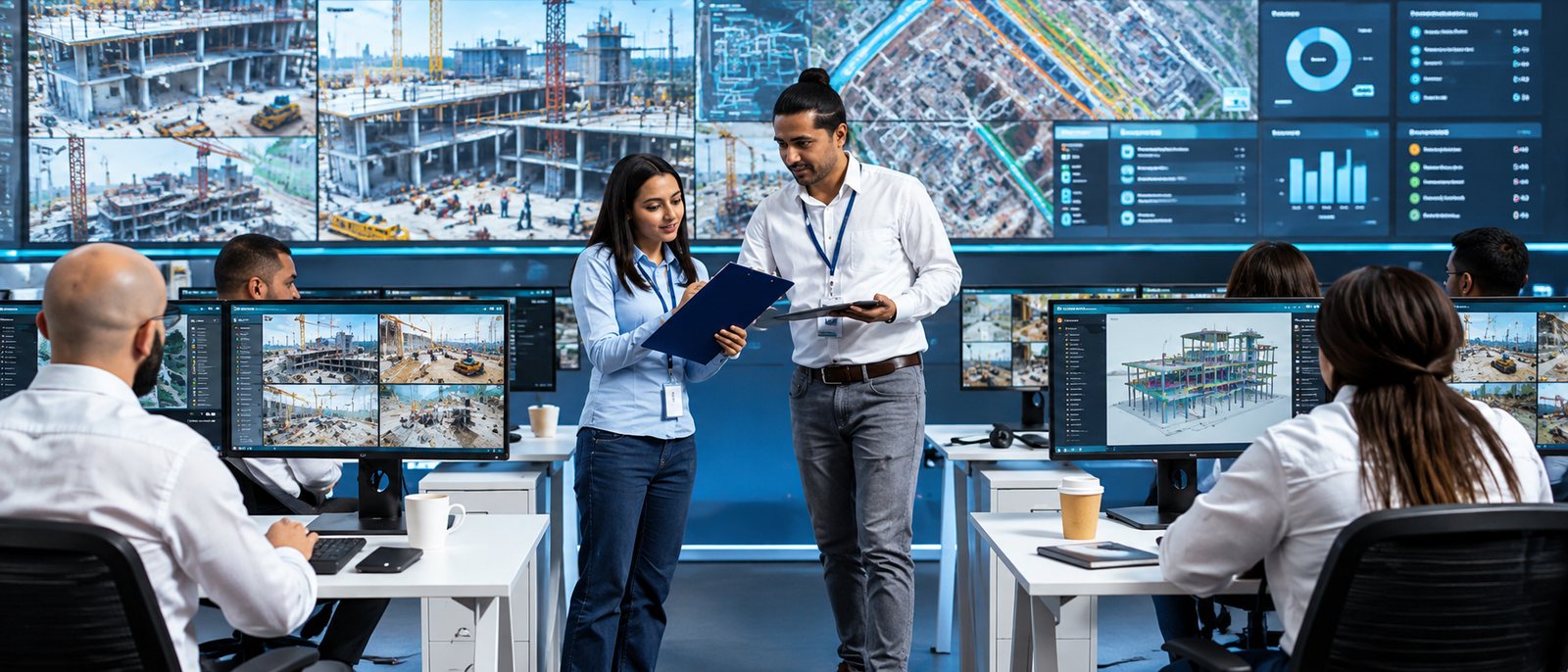
Imagine arriving at a construction project review in 2030.
Before the meeting begins, the planning team knows which upcoming activities face unresolved constraints. Procurement has identified deliveries that could affect site progress. Engineering has a prioritised list of pending decisions. The commercial team has identified instructions requiring documentation.
The project director sees the connections between these issues rather than receiving four separate reports.
Behind the scenes, specialised AI agents have helped organise information, identify dependencies and prepare matters for review.
The people remain responsible. The way they work has changed.
From Software Tools to Intelligent Support
Construction professionals already work with numerous applications for planning, design, procurement, quality, contracts and reporting.
Most require people to retrieve information, interpret it and coordinate with other departments.
AI agents introduce a different possibility.
Instead of waiting for someone to search through records, a specialised agent could be assigned a defined responsibility within authorised information sources.
A planning agent could examine programme updates and emerging constraints.
An engineering agent could highlight unresolved RFIs and drawing dependencies.
A procurement agent could identify material commitments affecting upcoming workfronts.
A quality agent could flag missing inspection records and outstanding non-conformances.
A commercial agent could help assemble supporting information for payment applications, variations and claims.
Working together, these agents could help teams recognise issues that are difficult to see from individual departments.
A New Working Relationship
This future requires more than connecting an AI model to project files.
Construction information contains inconsistencies, informal instructions, superseded documents and commercially sensitive records.
Intelligent systems must understand what information they are permitted to access, distinguish reported progress from verified progress and show the evidence behind important findings.
They must also recognise the limits of their authority.
An AI agent may recommend that an inspection requires attention. It cannot independently certify the work.
It may identify a potential programme risk. It cannot determine contractual entitlement without the appropriate professional assessment.
Accountability must remain with authorised construction professionals.
The Future Is a More Connected Project Team
Imagine site engineers spending less time compiling repetitive reports and more time resolving execution problems.
Imagine project managers receiving earlier warnings instead of discovering issues during monthly reviews.
Imagine owners gaining clearer visibility of decisions, risks and responsibilities across multiple projects.
These outcomes are possibilities, not automatic consequences of adopting AI. They depend on reliable records, carefully defined agents, secure access and effective human oversight.
But they point towards a meaningful shift in how construction organisations could operate.
The construction team of tomorrow will still be built around engineers, architects, planners, contractors and project leaders. The difference is that specialised AI agents could help them work with greater clarity, coordination and foresight.